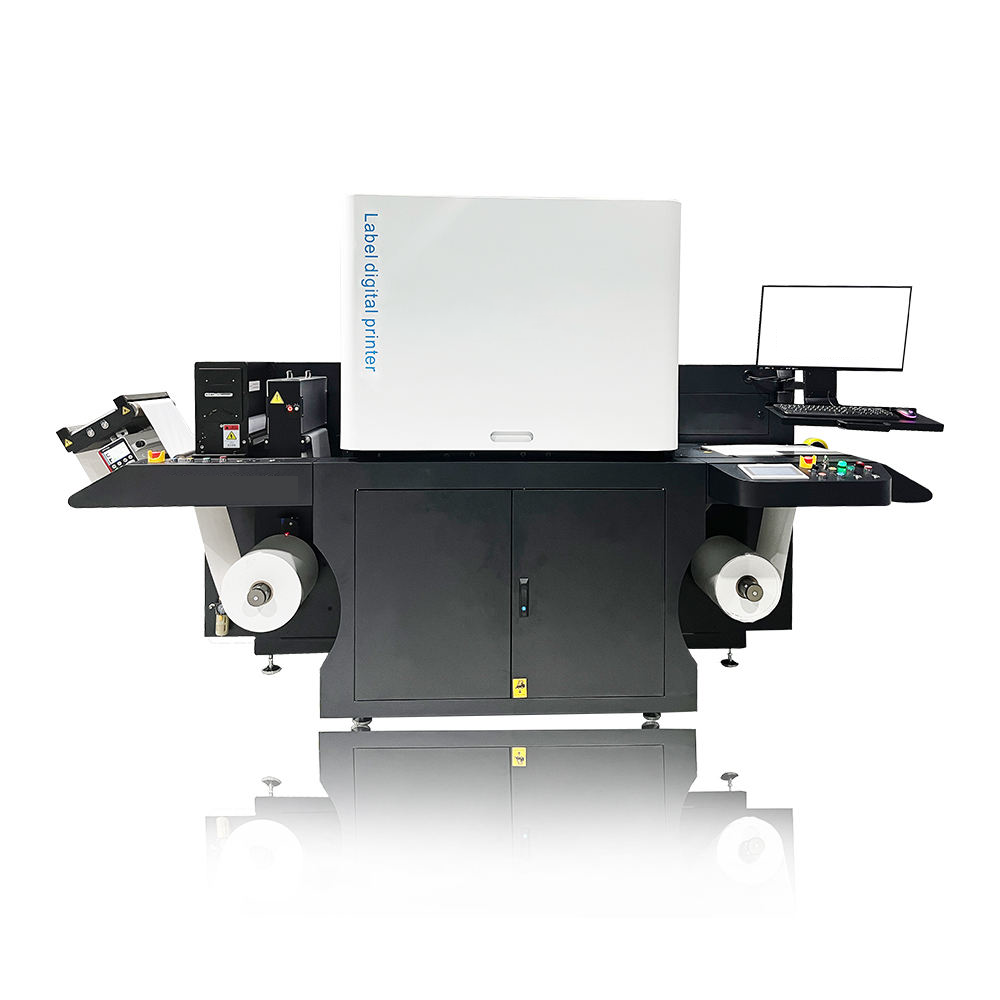
In the field of label and flexible packaging printing, the uv roll-to-roll printing of PET, PVC, PE and other film composite materials always face two major technical bottlenecks. One is the thermal stretching deformation of the roll in the printing process, and the other is the adhesion of UV ink on low surface energy films. The accuracy of registration, firmness of the ink layer and yield of the final product of printed materials are directly affected by these two critical issues.
The roll-to-roll UV digital printer with constant tension control technology, water-cooled platform temperature control system and adjustable LED curing solution is systematically solving these industry pain points. In this article, we will elaborate three technical aspects of obtaining high-quality scratch-resistant UV printing on PET/PVC/PE composite films, including tension control, adhesion performance and dyne value management.
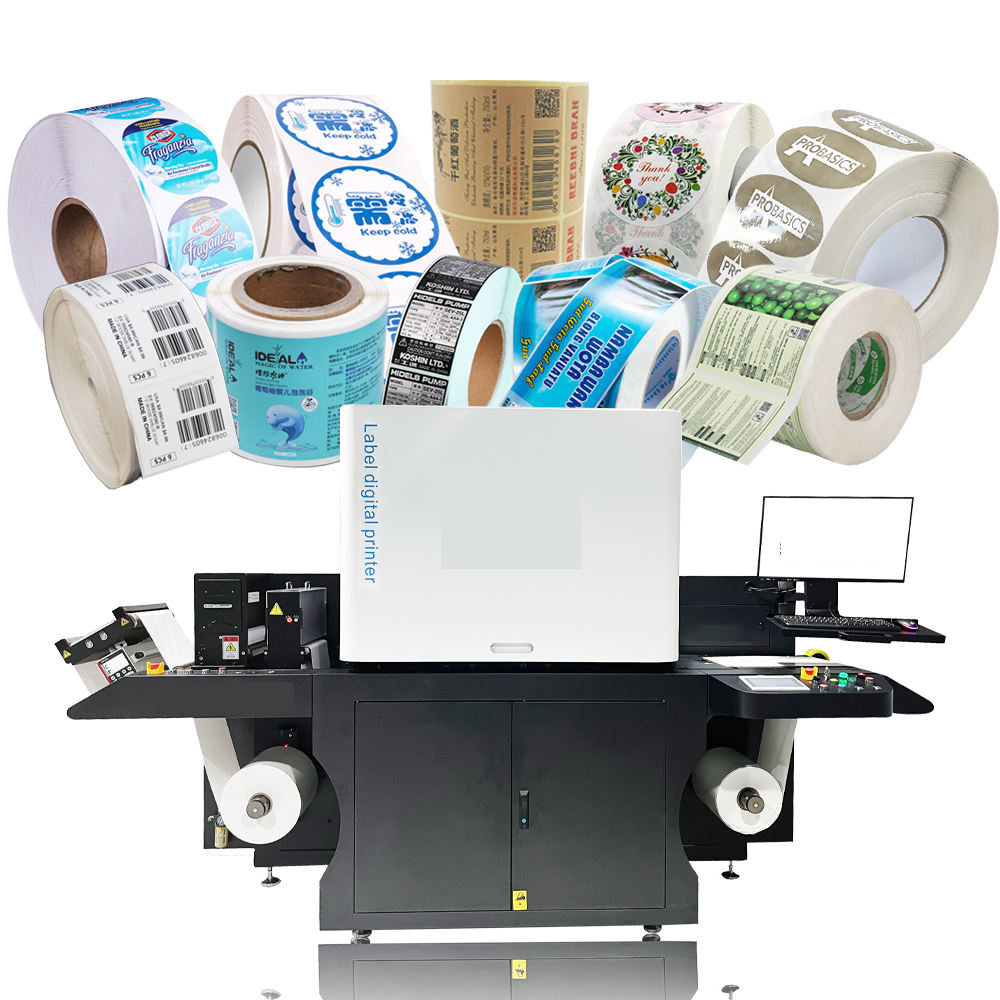
hardware technology for solution of roll-to-roll thermal stretching deformation: Tension control of thin film substrate
Thermal tensile deformation of thin film materials is the main factor affecting the printing accuracy in roll-to-roll printing. When heated, PET, PVC, PE, and other film materials will produce different degrees of linear expansion, especially when curing UV inks. The ink layer absorbs ultraviolet energy, heats up, and transfers this heat to the film substrate, causing the material to stretch microscopically in the direction of the fabric. This thermal effect is particularly important for soft film materials with a thickness of only 0.18mm or even less. If the tension control is not appropriate, the material may be stretched unevenly, wrinkled and even broken film during the feeding process.
The key to solve this problem is the constant tension control architecture of roll-to-roll UV digital printing machines. Industrial roll-to-roll equipment generally uses a multi-stage tension closed-loop control system, which divides the entire feeding path into four independent control sections: unwinding tension, feeding traction tension, processing tension in the printing area and winding tension. Each section is equipped with a tension sensor (such as a floating roller displacement detection device) to obtain the real-time feedback of the tension value, and the servo controller dynamically adjusts the output torque of the corresponding driving motor. The feedback control of the system controls the torque of the output motor based on the detection value of the tension sensor. For example, when adjusting the output tension, the force acting on the sheet is consistent with the set tension.
Considering this, advanced equipment has also introduced water-cooled printing platforms and intelligent LED curing systems. The water-cooled platform keeps a uniform temperature during the whole printing process, which could effectively suppress the thermal stretching and wrinkling of materials caused by heat accumulation. The adjustable power LED curing system enables operators to precisely control curing energy according to the thermal sensitivity of the material, avoiding thermal deformation due to excessive heating. These hardware technologies have synergistic effects to maintain the stability of material size during high-speed continuous printing and control thermal stretching deformation at the micrometer level in roll-to-roll UV digital printers.
Adhesion performance of PE composite materials from flexible packaging to hard quick release of tissue box digital printers.
PE (polyethylene) composite film is a widely used material in the area of flexible packaging and labeling for fast-moving consumer goods. However, its chemical properties of non-polar and low surface energy bring a core challenge of UV ink adhesion in printing processes. When using roll-to-roll UV digital printers in the production of PE composite material labels, such as tissue boxes, daily chemical product packaging, and food soft packaging, the adhesion of the ink layer directly impacts the durability and end-use experience of the product.
The adhesion mechanism of UV ink on PE surface involves three consecutive processes, namely wetting, spreading and curing. The spreading and wetting behavior of ink on the surface of PE depends on the relationship of the surface tension of ink and the surface energy of PE substrate. Roll-to-roll UV digital printers use high-precision industrial nozzles (e.g., Ricoh G5/G6 nozzles) to precisely control the ink droplet size to the skin level, and can accurately place tiny ink droplet sizes and achieve better wetting effects on low-surface-energy materials.
But the curing phase is just as important for adhesion. The volume shrinkage rate of UV ink in the curing process can reach 10%-20%. The internal stress generated can easily “peel off” the ink layer from the smooth PE surface. Modern roll-to-roll UV digital printers employ a multi-stage curing strategy, i.e. first execute “pin curing” with a lower light intensity to preliminarily shape the ink layer without significant shrinkage, and then complete the full cross-linking via post-curing. This graded curing method can effectively release the internal stress of the ink layer and greatly improve the adhesion strength of ink layer in the PE composite film. With a flexible UV ink formula (the cured ink layer has a certain degree of elasticity and can absorb internal stress), even in flexible packaging applications that require bending or stretching, the printed pattern can stay intact and not fall off.
The labels printed by roll-to-roll UV digital printers on PE-coated packaging of rigid fast-moving consumer goods such as tissue boxes can meet the adhesion standard of 5B level (no ink layer off) after 3M tape testing (attaching 3M610 or 810 tape to the surface of printed product for 30-60 seconds and then peeling off). The performance of this equipment has been widely applied and validated in the fields of daily chemical labeling, food labeling and flexible packaging.
Deep analysis of Dyne value: How to get high precision marking on adhesive surfaces without coating
The Dyne Level is a principal indicator of the surface energy of materials and is typically expressed in mN/m or dynes/cm. The dyne value is the direct factor to determine the wettability and adhesion of ink on the substrate surface in UV printing. For film materials such as PET, PVC, PE etc. the untreated surface energy is normally below 38-40 dynes/cm which makes it difficult for UV ink to fully wet and spread. It is generally believed in the industry that the surface tension of thin film materials must reach 38 dynes or above to ensure normal printing, and 42 dynes or above is required for ink to adhere firmly.
The technical route of “high-precision marking without coating” for roll-to-roll UV digital printers is based on the cooperative optimization of the integrated online surface treatment module and the UV ink formula of the equipment.
Online corona treatment devices can be integrated at the hardware level in roll-to-roll UV digital printers of industrial grade. Corona treatment uses high voltage discharge to create polar groups (-OH, -COOH, etc.) on the film surface, which immediately increases the surface energy of PET/PVC/PE from below 38dynes/cm to 48-56dynes/cm. For PE materials, the surface tension after treatment should be not less than 42 dynes/cm; for more difficult to adhere materials such as PET and PP, the processing degree should exceed 50 dynes/cm. The effect of improving surface energy will decay over time, so printing should be carried out as soon as possible after corona treatment.
At the ink formula level, roll-to-roll UV digital printers can use a specialized UV ink optimized for film materials. This ink type is characterized by the presence of an adhesion promoting resin or monomer in the formula and a surface tension of 25-35 dynes/cm creating a difference of 5-10 dynes/cm with the surface energy of the treated substrate (35-45 dynes/cm and above) – this is the optimal matching range for good wetting and adhesion. For PET materials, silane coupling agents (e.g., KH-550) in special ink formulations can react with the surface of PET to form chemical bonds; For PE materials, adding 5-8% cyclohexanone or butanone solvents can slightly swell the surface of PE and form microanchor points.
With the triple technology combination of “online corona treatment + specialized UV ink + precise curing control”, roll-to-roll UV digital printers can achieve high-precision marking on PET/PVC/PE composite films without the need of additional primer coating. In actual production, the processed thin film material can be printed with complex information labels such as variable data, QR codes, barcodes, etc. clearly by combination with the equipment’s high-precision nozzle system (the printing resolution can reach 720 × 2880 dpi). This technological path not only simplifies the production process and reduces the consumption cost, but also makes the roll-to-roll UV digital printer an important equipment for the label printing industry to realize the transformation from traditional plate-making printing to digital and personalized production.
Final Thoughts
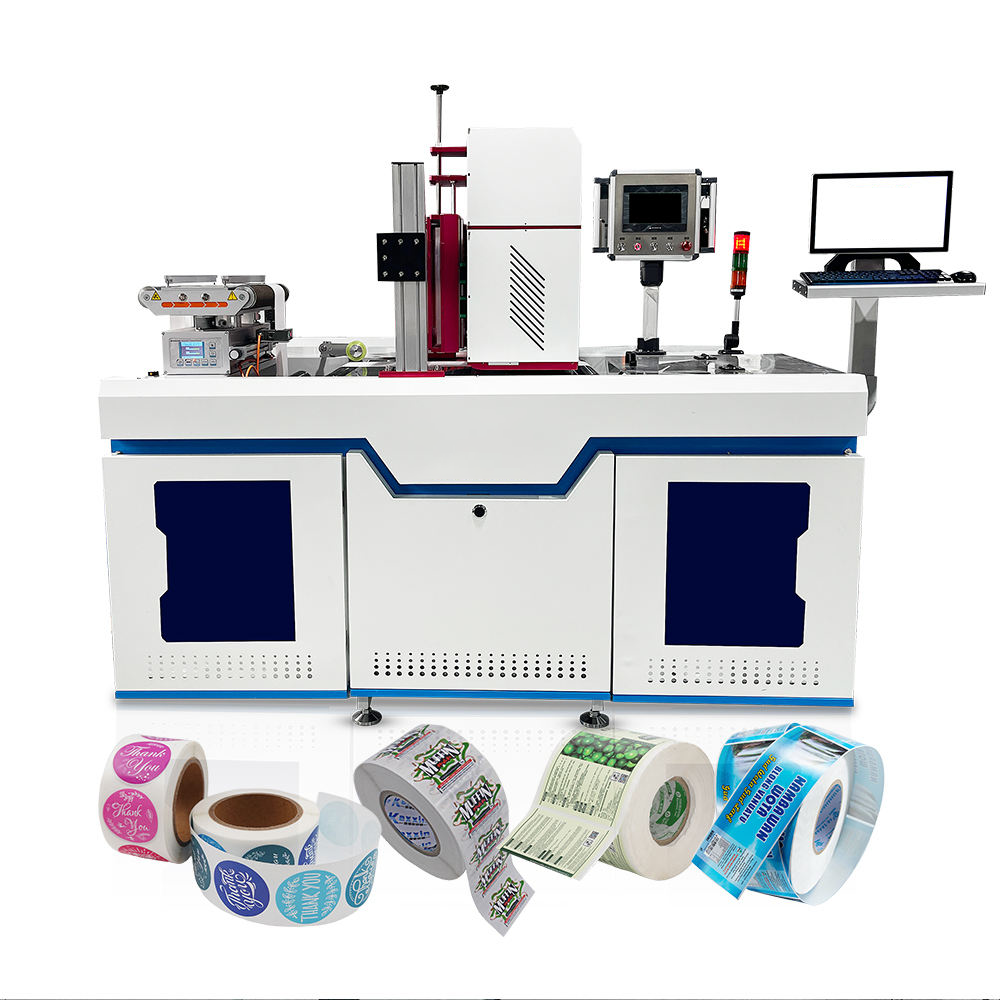
Finally, the technical advantages of roll-to-roll UV digital printers in the field of PET/PVC/PE composite film printing are reflected in three aspects: 1. Constant tension control and water-cooled platform to solve the thermal stretching deformation problem of film materials, so that the equipment can maintain micrometer-level registration accuracy in high-speed continuous production. The adhesion problem of low surface energy materials has been solved by multi-stage curing and a special ink formula, and the printed products can pass the 3M tape 5B-level testing. The surface energy of the film is increased from less than 38 dynes/cm to more than 48 dynes/cm . The online corona treatment and UV ink surface energy matching technology achieves high-precision marking without primer.
These technological breakthroughs enable roll-to-roll UV digital printers to be widely used in the production of a variety of materials, such as coated paper, synthetic paper, writing paper, double-sided adhesive paper, PET film, PVC film, PE composite film, etc. It can produce labels of wine, cosmetics, intelligent labels with variable information, and a variety of stickers. At the same time, the equipment can meet the requirements of high precision feeding and automatic collection of continuous production methods, and the seven core characteristics of high speed (70-160 meters/minute), high precision (supporting QR code/barcode/variable data printing), color saturation, personalized customization, mature technology, sturdy and durable design and strong material compatibility are leading the label printing industry to a more efficient, flexible and sustainable direction.
For printing companies targeting the global market, choosing a roll-to-roll UV digital printer with mature technology means gaining key capacity flexibility and quality assurance in the trend of personalized, small-batch and multi-variety orders.
No responses yet