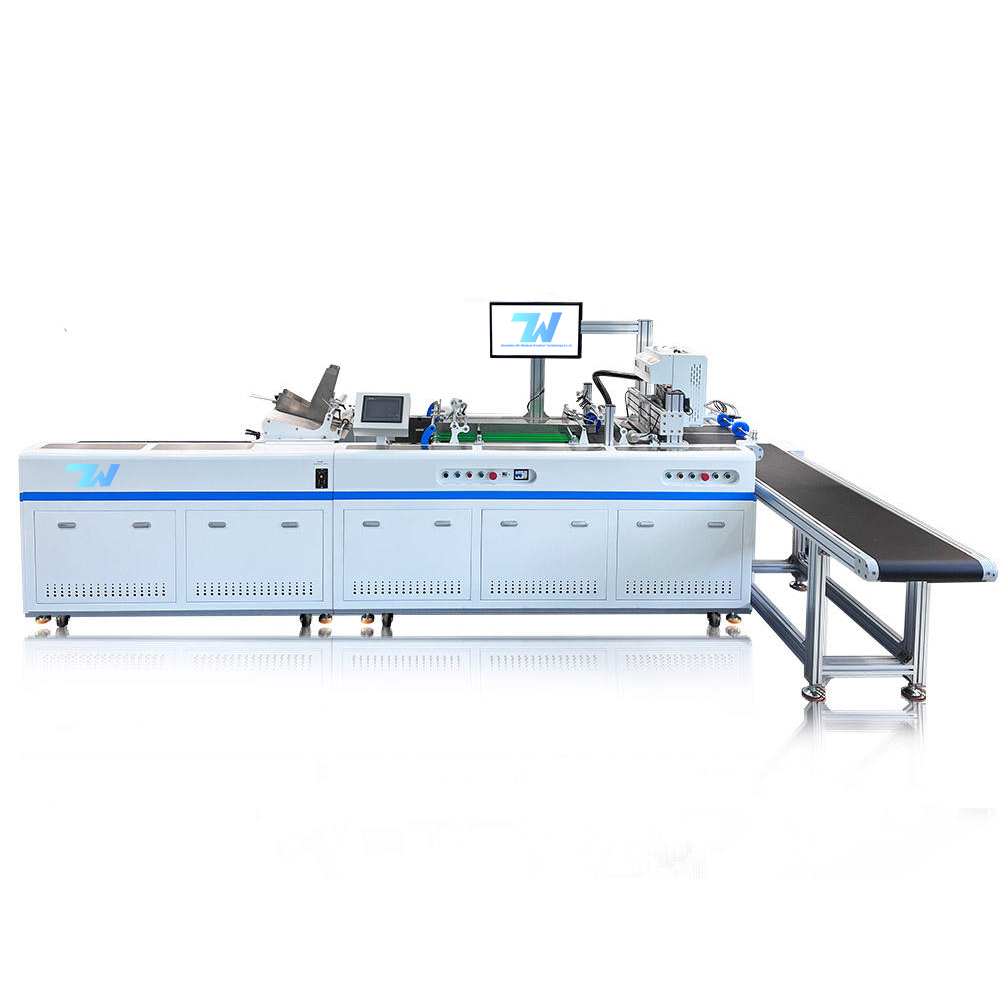
The worldwide printing industry is in the midst of a paradigm shift from “analogue plate making” to “digital direct printing.” According to industry statistics, the global UV digital printer market is projected to reach about US$3.18 billion by 2025 and is expected to exceed US$7.48 billion by 2032, with a compound annual growth rate of over 12%. With the characteristics of no-plate-making, variable data printing and instant curing, UV digital printers are gradually becoming the core equipment of manufacturing lines especially in professional fields such as clothing tags, RFID tags, tickets and smart cards. However, under the technology dividend, many printing enterprises still face practical challenges in equipment selection, process adaptation, cost control and investment risks. This paper uses the data of the industry forefront and the review of the real project to provide a quantifiable decision-making reference framework, which can help practitioners scientifically evaluate the value of introducing UV digital printing technology.
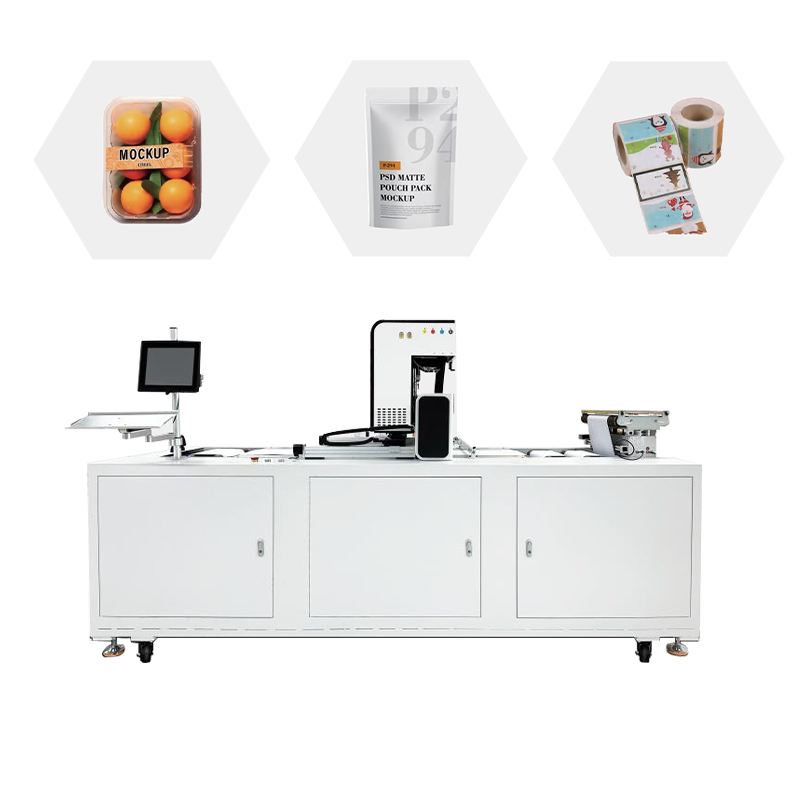
1. 4 Major Industry Challenges for UV Digital Printers in Segmented Applications
1. Problems of precise feeding and automatic collection of thin substrates
Clothing tags, RFID tags and tickets are commonly made of thin adhesive or paper with a thickness of 30-150 g/m², which has poor material rigidity and is prone to warping, deviation, wrinkling and even paper breakage during high-speed printing. The traditional screen printing or flexographic printing can still handle the tension rollers and correction systems, but the distance between the nozzle and the material of UV digital printers is only 1-2mm, and any small material fluctuations will cause nozzle scratches or graphic distortion. At the same time, the surface of the cured UV ink still has a certain degree of stickiness during automatic collection and stacking. If the collection device does not have anti-adhesion or isolation powder-spraying units, the finished products will stick to each other, affecting the subsequent die-cutting and read-write testing. This problem is particularly acute in production workshops with large humidity variations, and needs the integration of equipment for precision tension control, edge detection sensors and layered collection. However such configurations often add considerable cost to the equipment.
2. High resolution printing stability for QR codes and variable data
The printing resolution of 600 × 600 dpi or above is stable. QR codes and DataMatrix codes on RFID tags and tickets usually need to be of quality standards of Class B or above as per ISO/IEC 15415 [ ]. However, the rheological properties of UV ink are greatly affected by the environmental temperature, and slight deviations of the nozzle voltage wave form may lead to satellite ink droplets or broken lines, which lead to rough edges and reduced contrast of the QR code module. Even more difficult is the case of high speed production (>50 meters/minute). After several hours of continuous operation the nozzle can get clogged or spray diagonally. Frequent ink pressure maintenance, even with automatic cleaning system, can consume a large amount of ink and decrease effective production capacity. Some users attempted to “flatten” the ink dots by increasing the UV curing power. However, the adjustment resulted in material shrinkage and deformation which further aggravated the coding deformation. This contradiction means that for the equipment to have the functions of intelligent temperature compensation, waveform adaptation and real-time nozzle status detection, only a few high-end equipment can stably achieve these functions at present.
3. Differences in material compatibility increase the risk of adhesion and weather resistance
UV digital printers can print on PET, PVC, PP, synthetic paper, even metal foil. However, different materials have very different surface tensions. Untreated PE film for example has a surface tension of just about 32mN/m but UV ink needs a minimum of 42mN/m to wet well. If the user does not carry out corona treatment or apply base oil in advance, the ink layer may be easily peeled off by the tape after solidification. Even with material pre-treatment at standard, the migration of additives between different batches can influence the persistence of adhesion. Especially for outdoor hang tags or washing labels, pattern peeling often occurs after wet heat or solvent wiping. This type of problem is often hard to detect at the time of equipment acceptance, and only shows up after mass production and delivery to end customers, leading to return claims. The industry does not build a unified material adaptation database and the process parameters can only be accumulated by enterprises through a large number of trial and error, which greatly prolongs the production cycle.
4. The investment payback period is unknown and the total cost of ownership is high.
UV digital printers can cost anywhere from tens of thousands of dollars to hundreds of thousands of dollars, but the initial purchase price only represents 40% to 55% of the total cost of ownership. The continuous cash flow pressure is the replacement of nozzles (lifespan about 1-2 years per nozzle, unit price thousands of dollars), ageing of UV-LED light modules (lifespan about 20000 to 30000 hours), consumption of specialised ink (several hundred dollars per litre) and regular maintenance of labour. The source of orders for small and medium-sized printing factories engaged in small-batch customised orders is relatively unstable, and the equipment utilisation rate is often below 60%. At this moment the amortisation of fixed costs per square metre increases sharply, which could lead to a lower actual gross profit margin than traditional printing methods. More importantly, technology is iterating fast; the advent of new nozzles or curing systems means that existing equipment faces the risks of depreciation and poor liquidity in the second hand market, making investment decisions even more difficult.
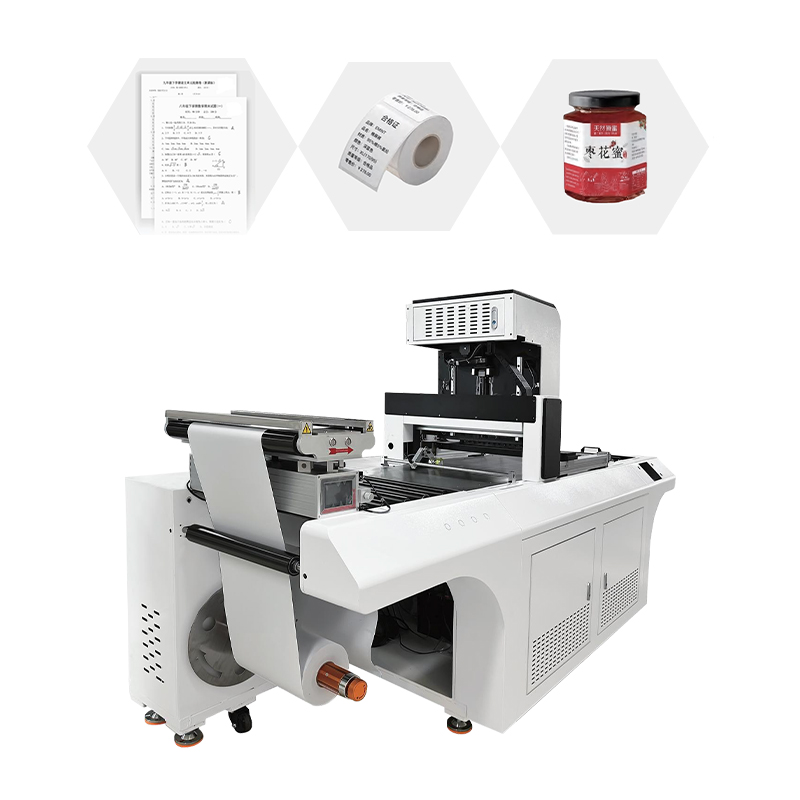
2. Practical Case Study: The Real Way from Trial and Error to Scaling Up
Case 1: Southeast Asian clothing tag supplier addresses thin material deviation and collection problem.
Background: A Vietnamese printing company that supplies international fast fashion brands. The company operates two in-house UV digital printers to produce wash labels and hang tags. The material is 120 mm wide and 80 g/m2 copperplate adhesive. The long term problems of the equipment are feeding deviation (±0.5 mm), winding adhesion, high scrap rate (8%) in the later die cutting process and about 3000 finished products wasted per day.
2024. Replaced the industrial-grade UV digital printer with a closed-loop tension control system and static elimination rod and added a silicone oil spraying device and a spaced collection box to leave a small gap between each label. Additionally, the device is equipped with the edge optical sensors that can provide the real-time feedback of the material position and automatic regulation of the traction roller speed.
Effect: The feeding deviation is controlled within ±0.1 mm, and the phenomenon of adhesion in collection is basically removed. Scrap rate has been reduced from 8% to 1.2%. The monthly waste reduction is about 61,000 hang tags or about 61,000 pieces based on the monthly production of 900,000 hang tags. The monthly increase is approximately 1830 US dollars calculated at the selling price of 0.03 US dollars per finished product while saving labour costs for waste disposal. The investment is projected to have a shorter payback period of 14 months.
Case 2: QR code printing quality fluctuations of European RFID tag printing plants.
Background The producer of German smart cards and RFID tags uses UV digital printers for printing EPC codes and DataMatrix QR codes. However, after continuous operation for 4 hours, the nozzle temperature increased, which caused the ink droplet volume to deviate, and the QR code level was degraded from A to C, which cannot meet the IEC 61000 standard for automotive industry customers. 20% of production capacity was lost for 2 hours every time the factory was shut down for calibration.
Upgrade to a printer with nozzle constant temperature circulation system and greyscale variable ink droplet technology, which is equipped with an online barcode verification camera, real-time feedback of quality parameters and automatic adjustment of printing voltage. The curing power of UV-LED will also be reduced from 80% to 60% to lessen the heat build-up effect on the material.
Result: The QR code level was stable at A level (ISO/IEC 15415 score ≥ 4.0) after running continuously for 12 hours. The equipment utilisation rate has increased from 65% to 92%, and the monthly average production has risen from 400000 sheets to 580000 sheets, which has led to an increase in revenue of approximately 42000 euros. This plan has also been replicated in two other production lines of the factory, becoming a quality reference in the region.
Case 3: North American ticket-printing companies reduce labour costs with automatic collection and ink path optimisation.
Background: A ticketing company in the United States prints concert tickets and gift cards of 250 g/m2 white cardboard in various sizes. The original equipment was gathered in a haphazard way and it took two workers to be constantly ordering and stacking it. UV ink usage was high (12ml per square metre on average) and exceeded the budget.
Solution: Introduce a stacked automatic material collection platform. Optimise the anti-clogging and flash spray strategy of the nozzle to reduce the flash spray frequency of the nozzle by 40% without increasing the colour density and reducing the ink flow . Use high colour concentration ink to reduce the print coverage from 130% to 100%.
Result: Manual labourers released with automated material collection with an annual labour cost saving of approximately $72,000. Ink consumption reduced from 12 ml/m² to 8.5 ml/m² with an annual labour cost saving of approximately $21,000. Ink consumption reduced from 12 ml/m² to 8.5 ml/m² with an annual ink cost saving of approximately $21,000. This has resulted in a total reduction in annual operating costs of $93000. The total project investment is approximately $220000 with a pay back of approximately 2.4 years.
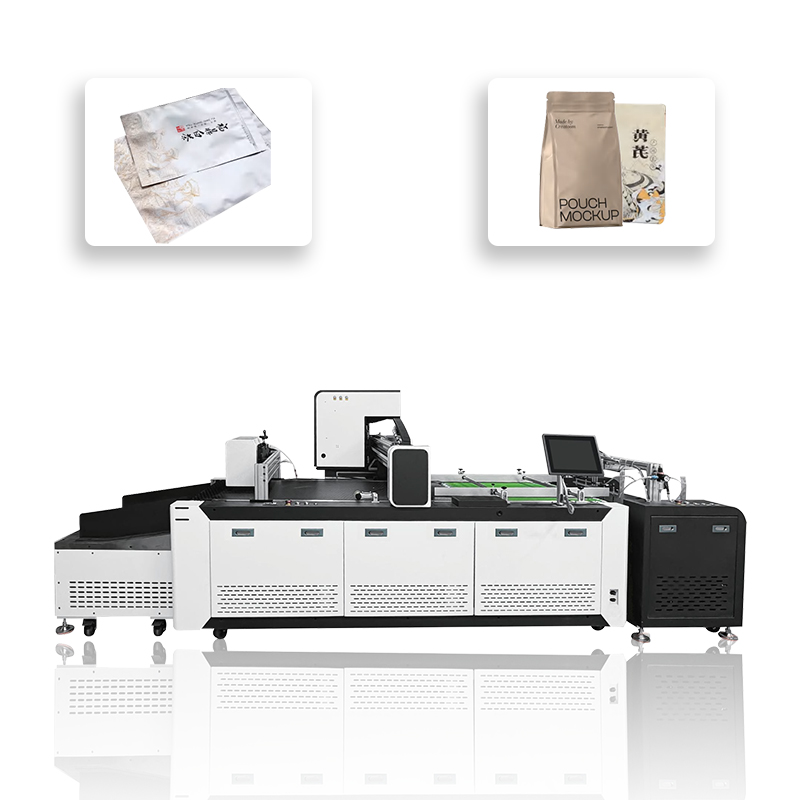
3. UV digital printers ROI (Return on Investment) quantitative instrument
To scientifically evaluate the economic benefits of UV digital printers, a dynamic model needs to be established to include income, cost and time factors. Here is a frequently used formula for ROI calculation and key parameters in the industry. Enterprises can calculate based on their own data.
Calculation formula of the core
- Monthly effective output = equipment theoretical speed (m/min) x 60 x daily effective operating hours x equipment utilisation rate x monthly working days.
- The utilisation rate of the equipment must subtract the time of cleaning, coil change, and breakdowns, generally between 65% to 85%.
- Monthly sales revenue = monthly effective output (square meters) processing unit price per square metre
- The unit price varies depending on the application, with ordinary adhesive labels costing about 8-15 US dollar per square metre, RFID-encoded labels can reach 25-40 US dollar per square metre and ticket types cost about 10-20 US dollar per square metre.
- Variable cost per month = ink consumption per month (L) x unit price of ink + electricity consumption per month (kWh) x price of electricity + labour cost per month + ancillary materials per month (primer, cleaning solution, etc.)
- Monthly Fixed Cost Amortisation. = (Total Equipment Price – Residual Value) / Number of Months Depreciated (Usually 60 Months) + Average Monthly Maintenance Cost.
- Net profit for the month = Monthly sales income – Monthly variable costs – Monthly amortisation of fixed costs
- Investment payback period (months) = total investment in equipment / monthly net profit
Key drivers and sensitivity analysis
1.The most sensitive variable is equipment utilisation. A decrease of the utilisation rate from 80% to 60% will increase the unit fixed cost by 33% and the payback period may be prolonged by more than 50%. It is recommended that companies should select modular upgradable models before the order volume stabilises, so as to avoid excessive investment.
2.The variable cost of ink is typically 30-45%. High colour density and low viscosity inks can reduce the ink consumption per unit area, but also need to consider the compatibility of nozzles. The actual test shows that the original factory certified ink unit price is high, but the service life of the nozzle can be extended by 20% to 30%, and the overall cost is better.
3.Every 1% reduction in scrap rate is a 1% direct increase in output. Spending money on online detection systems and tension control parts to improve ROI is not as effective as reducing ink costs.
4.Artificial substitution is a visible hard saving. A device with automatic material collection and cleaning functions can replace 1-2 operators, saving approximately $50000-$80000 annually based on an hourly wage of $25 in the US manufacturing industry.
Benchmark data reference
The average payback period for investment after the introduction of industrial-grade UV digital printers is 16-22 months, according to a tracking survey of 12 medium-sized label printing companies worldwide (2024-2025). Among them, three enterprises mainly engaged in RFID coding and personalised tickets, with a payback period of only 12-14 months because of their high value-added pricing; The recycling period of enterprises mainly using ordinary hang tags is about 24 months. The average internal rate of return (IRR) of the equipment in 5 years of service is 18% to 25% in all cases, which is much better than traditional flexographic printing equipment (IRR of about 12%). In addition, about 70% of the enterprises doubled their production capacity in the second year after the equipment was put into operation, mainly because the fast order-changing ability of digital printing without the need for plate making increased the number of short orders.
4. Frequently asked questions (FAQs)
Q: Are high speed UV digital printing prone to paper jams with thin labels? How to prevent this from the point of view of the choice of equipment?
Answer: Models that have an independent servo tension drive and air-floating guide rollers should be given priority and equipment should have edge correction sensors and paper breakage detection protection. The stacking method can effectively avoid adhesion than the roll to roll collection unit so it is better to use a stacked collection platform To test the machine, commonly used materials (e.g. 60 g/m² adhesive) shall be used and the machine shall be run continuously at the production speed for more than 1 hour, observing the fluctuation of feeding and the neatness of receiving.
A: The white lines or missing ink when printing a QR code are due to the following reasons: How to resolve it?
Answer: The white lines are most likely caused by clogging of the nozzle or unstable negative pressure at the ink path. First, check whether the negative pressure system leaks, and second, check whether the nozzle cleaning cycle is reasonable. If it happens frequently, it may be due to bubbles or impurities in the ink, and the filter status should be checked. The most reliable method is to use equipment with a circulating ink path and automatic bubble discharge function, and to do nozzle status detection printing once a day to quickly clean up abnormal nozzles.
Q: How adaptable are UV digital printers to different materials? When we change the material, do we have to re calibrate the parameters?
The printing mechanism of the equipment itself is the same, but due to different wetting and thermal shrinkage rates of different materials, it is necessary to adjust the UV curing power, printing waveform voltage and printing speed. Most industrial-grade equipment can store multiple sets of “material formulas” that operators can easily access with just one click. However, for first-time use of new materials, adhesion, scratch and bending tests are recommended to establish optimal coating or corona treatment conditions. After getting enough data, the time for material transition can be controlled within 5 minutes.
Q: When calculating the investment payback period, how to reasonably estimate the residual value of equipment and maintenance costs?
Answer: Generally, the straight-line depreciation method is adopted and the residual value after 5 years is taken as 20% to 30% of the original value. For maintenance costs, the first year is about 2% to 3% of the total equipment price (mainly maintenance parts) and may be increased to 5% to 8% from the second year (including nozzle replacement and LED light attenuation). If the equipment is to be run in excess of 16 hours per day then an annual maintenance budget of 10% of the total equipment price is recommended. This data should be combined with the MTBF (Mean Time Between Failures) and MTTR (Mean Time to Repair) from the equipment supplier and entered into the ROI model.
Q: When the order volume of small printing factories is unstable, is it good to invest in UV digital printers?
Answer: Yes but buy modular or entry level industrial machines to prevent excessive one time investment. 30% to 40% of the production capacity will be dedicated to high-gross-profit businesses such as urgent orders, sample orders and souvenir customisation, taking advantage of the short-run advantage of digital printing. It is suggested to convert fixed costs into variable costs and reduce initial risks by adopting the “equipment leasing + pay-per-printing-volume” business model (provided by some manufacturers). According to reference data, investment return is much better than outsourcing when the average monthly order volume exceeds 2000 square meters.
Summary
Based on the above-mentioned industry pain points, case data and quantitative models, it can be seen that UV digital printing has evolved from “optional technologies” to “core competitive elements” in the fields of labels, tags, RFID and tickets. Though there are practical challenges of feeding and receiving thin material, such as high-precision coding, material adaptation, and overall costs, enterprises can achieve a significant reduction in waste rates from 8% to 1.2%, maintain a stable A-level QR code grade, and reduce annual operating costs by more than $90,000 by means of reasonable equipment configuration (e.g., closed-loop tension, constant temperature nozzle, and automatic feeding) and process optimisation (e.g., ink volume adjustment and curing power matching).
From the financial perspective, the investment payback period of mainstream industrial-grade UV digital printers is concentrated in 16-22 months, and the 5-year IRR is 18%-25%, better than traditional printing equipment. Among these, the payback period for high value-added applications (RFID coding and personalised ticketing) can be brought down to 12-14 months. More importantly, digital printing enables enterprises to make long-tail orders that were not possible before due to the “zero plate-making time” and “variable data capability” of digital printing, with average capacity utilisation increasing by more than 40% in the second year. With the continuous maturity of UV-LED curing and intelligent detection technology, the cost of equipment maintenance is reduced by about 5% per year, and the long-term economy is further improved.
Printing companies that are considering technology upgrades should do scenario calculations based on their own order structure and material types with the ROI formula in this article (assuming utilisation rates of 60%, 75%, and 90%, respectively), and then do technical benchmarking with at least three suppliers. The final decision should not only consider the unit price of the equipment, but also comprehensively consider the engineering solutions of the equipment to the core problems such as feeding of thin material, high-precision coding and automatic collection. To make truly rational investment decisions in a competitive global environment, technical parameters must be tightly integrated with financial models.

No responses yet