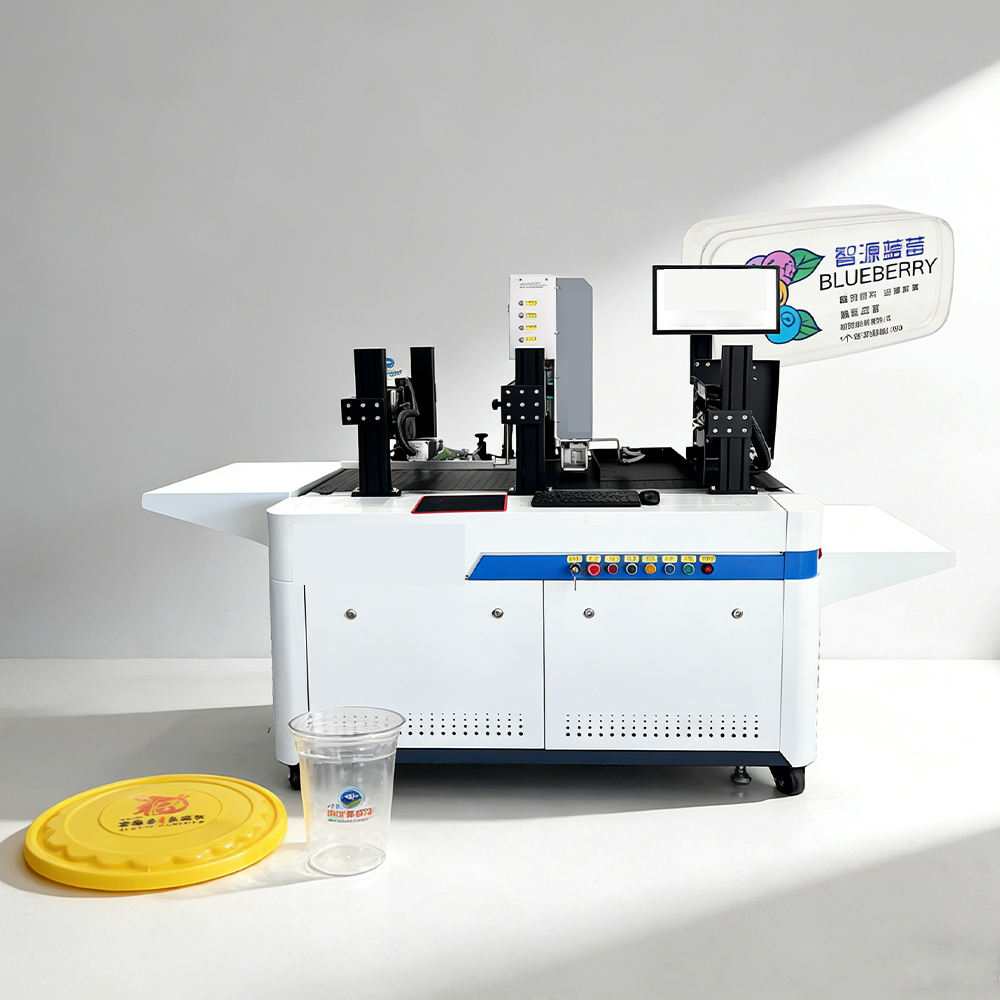
Today, in an era of rapidly accelerating digital transformation in the label printing industry, water-based digital printers are becoming an important technological bridge linking environmental protection needs and high-quality output. The global water-based digital printing market is expected to grow from $2.69 billion in 2025 to $5.2 billion in 2035 at a compound annual growth rate of 6.9%. The industry’s increasing demand for “small batch, multi-variety, short delivery” production model is behind this growth.
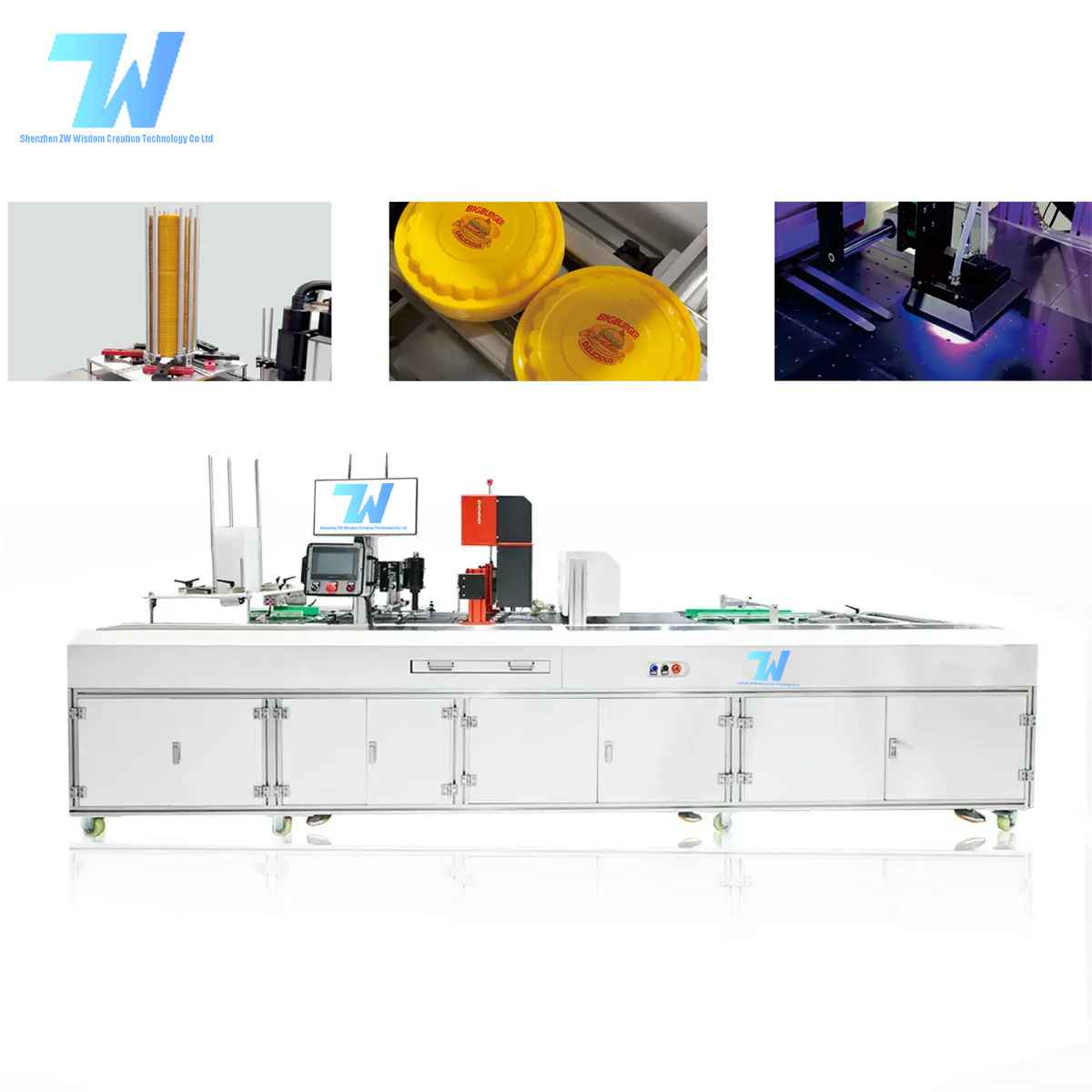
Professional printing equipment specially for single-item labels such as clothing tags, RFID tags, tickets, cards, etc. The core value of water-based digital printers is to realise the intelligent production process for precise feeding and automatic collection. However, the scientific adaptation of materials and the systematic optimisation of consumables are two key propositions that printing enterprises must master so that they can fully unleash the potential of the equipment.
1. Technical Principle and Material Basis of Water-based Ink Adaptation
1.1 Water-based Ink Composition and Properties
The main consumable for water-based digital printers is water-based ink, in which water is the primary solvent and colourants, surfactants, pH regulators, dryers and other additives. Compared with solvent-based ink, water-based ink has more than 90% lower VOC (volatile organic compound) emissions than traditional solvent-based ink. Water-borne ink mainly has two kinds, dye type and pigment type. Dye type has bright colours, but poor weather resistance, pigment type with excellent waterproof, light-resistant and scratch resistant properties.
Water-based ink has environmental benefits and is widely used in fields with high safety requirements, such as food contact packaging, textiles, and children’s products. Water-based ink is free of heavy metals, plasticisers and aromatic solvents, and can meet the safety requirements of food contact materials and the requirements of the green printing policy.
1.2 Ink and print head compatibility logic
The compatibility between the print head and the ink is the basis for the stable operation of the water-based digital printers. The internal channels of water-based print heads are fine and require high ink purity and are sensitive to corrosion or blockage, thus they require stainless steel or corrosion resistant materials. Inks are divided into water-based, UV-cured and solvent-based types, and these differ greatly in chemical makeup, viscosity and curing process. Each type of ink is compatible with a specific type of print head.
In fact, 90% of the nozzle blockages are not caused by the ink itself being toxic, but by the physical inevitability of drying and crystallisation. If the printer is left idle for more than 48 hours, the residual water-based ink in the nozzle will evaporate and gather in the micrometer-sized pores, and the pigment and resin will precipitate into a film, which is the real cause of clogging. Therefore, long-term stable operation of the equipment requires selection of ink compatible with the print head material and maintenance of ink viscosity and particle stability.
2. Material Adaptation: Collaborative Optimisation from Substrate Properties to Printing Parameters
2.1 Classification and adaptation strategies of substrates
The scope of application of the equipment is directly dependent on the material adaptability of the water-based digital printers. According to the ink absorption properties of the substrate, the materials can be divided into two categories:
The absorbent media are kraft paper, corrugated paper, rice paper, cotton paper, digital printing paper, offset paper etc. This kind of material has a good ability to absorb water-based ink, and the ink is dried through permeation and absorption. When printing, attention should be paid to the diffusion control of ink droplets on the paper to prevent image blurring due to dot expansion.
Non-absorbent/low-absorbent media are PE, PET, BOPP, metalized materials, films, etc. The main technical problem is that this type of material does not stick to water-based ink. The traditional solution needs pre-coating treatment, but the new generation of water-based ink technology has achieved direct printing without coating. For example, water-based latex ink has shown good adhesion and physical resistance on non-absorbent films such as PET and OPP, including scratch resistance, boiling resistance, and grease resistance.
2.2 Breakthroughs on difficult-to-print materials such as copper paper
Copperplate paper is one of the most difficult substrates to adapt materials to in water-based digital printers. The strong hydrophobicity of copperplate paper can easily cause surface ink accumulation, which will result in ink spots, noise and ink droplet accumulation. In large-area flat-screen printing, which accounts for 70% to 80% of business orders, the problems of white lines, wire drawing and colour difference are particularly prominent. In addition, the coated copperplate paper has a poor adsorption property for water-based ink, which can easily cause ink scattering, ink flow, and ink accumulation, making it difficult to accurately control the drying speed.
In response to the difficulties mentioned above, the specialised copper plate paper water-based pigment ink solution effectively solves practical production pain points such as ink spots, drawing, clogging and slow drying through the precise matching of unique formulas and paper coatings. The ink has excellent moisturising performance and is compatible with various nozzles such as Kyocera and EPSON. It prints smoothly with no clogging, instant drying without heat and rapid drying.
2.3 Control of process parameters for material adaptation
Material adaptation is not only the combination of ink and substrate, but also the combined control of process parameters such as drying temperature and printing speed. The drying temperature should be dynamically adjusted between 70 and 130°C depending on the printing speed, otherwise incomplete drying or paper deformation may occur. Heating can speed up drying, but high temperature can reduce the life of printers, which place extreme demands on the stability of the equipment and control system.
This situation is changing with the introduction of intelligent drying systems. The new generation of water-based digital printers is equipped with an intelligent drying system that can adjust the drying conditions according to different materials. The use of a rapid drying printing aid (Optimizer) increases the cure efficiency and results in consistently high quality output on uncoated media.
3. Consumables Optimisation: A System Solution from Ink Selection to Cost Control
3.1 Key points to consider in selecting inks
The printing quality of water-based digital printers is directly determined by the performance of ink. When selecting ink it is important to carefully consider the following dimensions:
Colour expression:With the six-color water-based ink system (CMYK plus orange and green), wide Pantone colour gamut coverage is achieved, and rich and vivid colour expression is realised. The optional configuration of high concentration white ink further expands its application scenarios on transparent and dark materials.
Adhesion and durability: The new generation of water-based pigment inks have excellent adhesion and scratch resistance. Water-based latex ink can withstand sunlight outdoors for up to 5 years without fading and can withstand bending at -20℃ without cracking.
Environmental compliance: Water-based ink meets the requirements of EU RoHS certification. Some products passed SGS and OEKO-TEX® skin-friendly certification, suitable for food-contact packaging.
3.2 Consumables cost optimisation path
The cost of consumables is a significant component of the operating costs of printing enterprises. The domestic compatible ink technology will mature more by 2025, and the unit prices will drop to 100-200 yuan, with consumable prices optimised by more than 75%. This cost reduction has laid a solid basis for the wide application of water-based digital printers.
Specific consumable optimisation strategies are:
Large-capacity ink supply system: The ink supply system features two 1.6 L large-capacity ink cartridges for each colour, greatly reducing the frequency of ink cartridge replacement and optimising workflow. The ink bag supply system and low ink volume alarm function can prevent production interruption due to ink shortage.
Ink consumption prediction and optimisation: Optimisation of printing time and ink consumption based on the analysis of the resolution and size of the printed images, and optimisation of ink usage parameters by combining historical printing data and real-time feedback.
Direct printing process without coating: eliminates the chemical coating pretreatment step of traditional printing, not only reducing material costs but also reducing the burden on the environment.
3.3 Maintenance of nozzle and longer life
The nozzle is the most expensive consumable part of water-based digital printers and scientific maintenance can extend its service life a lot. Standardised and scientific maintenance can greatly prolong the nozzle’s service life.
Maintenance points are:
Clean the nozzle: It is recommended to use a pH-compatible cleaning solution to avoid clogging from resin residue. Do not mix different types and brands of ink. Chemical reactions could corrode the nozzle and block the ink path. Keep the print area free of dust and clean, so that dust particles do not get into the nozzle. Regularly check the sealing parts of the nozzle, replace them in time when ageing or damage, and avoid ink leakage faults.
The application of automatic nozzle detection and compensation technology is changing the maintenance mode of the nozzles. Real-time nozzle verification technology (NVT) can monitor the status of the print head during the printing process, automatically compensate for missing nozzles, and provide continuous production. Automatic print head cleaning system can drastically reduce the operator interventions and manual maintenance works.
4. Customised industry applications: clothing tags to RFID tags
4.1 Printing of clothing tags and tickets
The printing of the clothing tag by water-based digital printers is becoming more and more mature. Traditional hang tag printing is plate based, with high minimum order quantities and long lead times. Digital direct printing technology eliminates the need for processes such as film output, plate production, and machine adjustment and trial printing, which can significantly shorten production cycles and reduce upfront investment costs.
When used for ticket printing, water-based digital printers can support variable data printing, can realise on-demand output of serial numbers, QR codes, personalised numbers and text. Small-batch rapid production can be carried out without plate making, reducing the sampling cycle by a large margin and reducing the cost of short-plate printing.
4.2 Real-time Printing and Encoding of RFID Tags
Water-based digital printers are amongst the most promising application fields for RFID tags. By 2025, the RFID tag market has reached the 200 billion level. Clothing retail is one of the most mature and fastest growing fields of RFID printer applications.
Water-based digital printers can print one-dimensional code, two-dimensional code, anti-counterfeiting code, images, personalised data on the surface of RFID tags. The non-contact inkjet printing technology will not damage the RFID chips, and the information writing and the output of tags can be realised synchronously. The device supports automatic batch (single sheet) writing of RFID data, printing of tag information and secondary verification of RFID tag performance to ensure 100% data accuracy.
The advent of fabric-based flexible RFID smart tags has further expanded their application space. Removing the hard substrate and integrating the chip with the fabric, they are both soft and invisible and lightweight and durable. Water-based digital printers’ flexible production capacity is ideally suited to this new type of label material.
5. Frequently Asked Questions (FAQ’s)
Q1: What are the suitable kinds of label materials for water-based digital printers?
Water-based digital printers are versatile and can be used on virtually all types of label materials, including paper (copperplate paper, offset paper, digital printing paper, and textured paper), film (PE, PET, and BOPP), metalized materials, and speciality materials. Some devices can be printed directly without any chemical coating pre-treatment. Absorbent media are dried by ink penetration, while nonabsorbent media depend on special water-based ink formulations for adhesion.
Q2: How to resolve the adhesion problem of water-based ink on non-absorbent substrates?
The direct printing without coating has been realised by formula optimisation of the new generation of water-based pigment ink. Water-based latex ink has good adhesion and physical resistance on non-absorbent films such as PET and OPP, including scratch resistance, boiling resistance, and grease resistance. For special materials, special auxiliary ink (paper or film) can be used in conjunction with quick-drying printing aids.
Q3: How to save costs on consumables for water-based digital printers?
To start consumables optimisation, the following aspects can be considered: adopt a large-capacity ink supply system to reduce the frequency of ink cartridge replacement; choose compatible domestic ink for adaptation (unit price has been reduced to 100-200 yuan by 2025). Usage optimisation by an ink consumption prediction system; The non-coating direct printing process eliminates the pre-processing step cost. Multiple materials can be used for one unit of water-based latex solution thus lowering equipment configuration and maintenance costs.
Q4: How to handle water-based ink clogging the nozzle?
90% of blockage in nozzles is caused by ink drying and crystallisation. Prevention measures include not letting the printer be idle for a long time (nozzle maintenance is required if it exceeds 48 hours). Use ink compatible with the nozzle material; regularly clean the nozzle using a pH-compatible cleaning solution; maintain a constant temperature and humidity in the printing environment. In case of blockage, the automatic nozzle detection and compensation technology equipped in modern equipment can automatically activate adjacent nozzle compensation.
Q5 : Can water-based digital printers meet food packaging safety requirements?
All right. Water-based ink is a type of ink that has water as the solvent base. It has over 90% less VOC emissions than traditional solvent-based ink. Our skin-friendly certified water-based ink contains no heavy metals, no plasticisers and no aromatic solvents, with no risk of chemical residue migration in the packaging, certified by OEKO-TEX® and SGS. Part of the plans have entered the national directory of advanced technologies recommended for energy saving and emission reduction.
Summary
Water based digital printers are reaching a technological maturity at a fast pace. From the perspective of material adaptation, the new generation of water-based ink has achieved wide compatibility with paper, film, metallized materials and other substrates. The maturity of domestic compatible ink technology from the point of view of consumable optimisation has optimised consumable costs by more than 75%, and the large-capacity ink supply system and automatic maintenance function have further reduced operating costs.
The global digital printing market has reached 32.1 billion US dollars by 2025. In this context, the digital printers with water-based inks that have environmental advantages, material compatibility and cost competitiveness, are becoming the core driving force for the digital transformation of the label printing industry. In the fierce market competition, the key to building technological barriers for printing enterprises lies in mastering scientific methods for material adaptation and systematic strategies for optimising consumables.
No responses yet