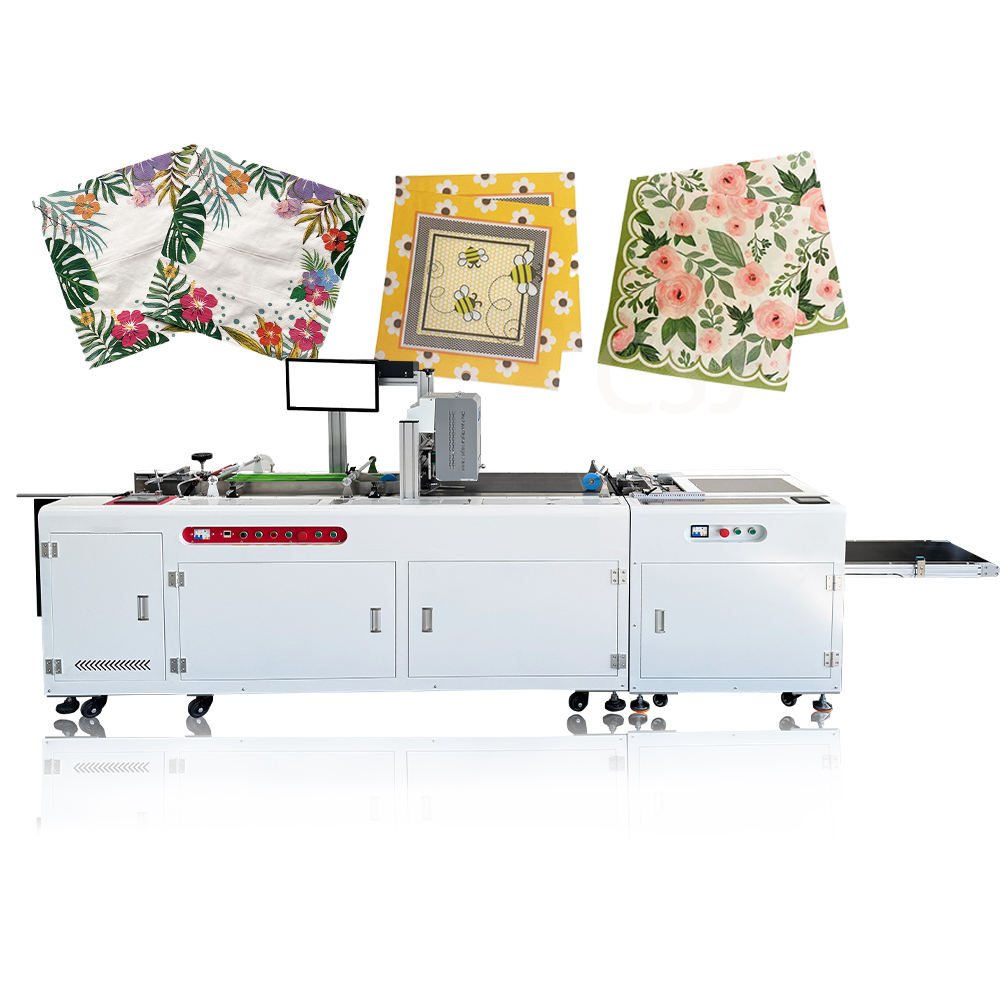
In the fast-moving consumer goods packaging industry, the packaging and printing of boxed facial tissues, handkerchiefs, kitchen paper and rolled toilet paper have long faced a core contradiction: the tissues themselves are soft and light materials, while the outer packaging paper boxes are corrugated cardboard or cardboard with a certain thickness, and the physical properties of the two are completely different. With traditional printing methods, tissues and packaging boxes are often printed on separate production lines—tissues using flexographic or gravure printing and packaging boxes using offset or preprint printing. This not only requires a large investment in equipment, but also a long production cycle and difficulty in ensuring color consistency.
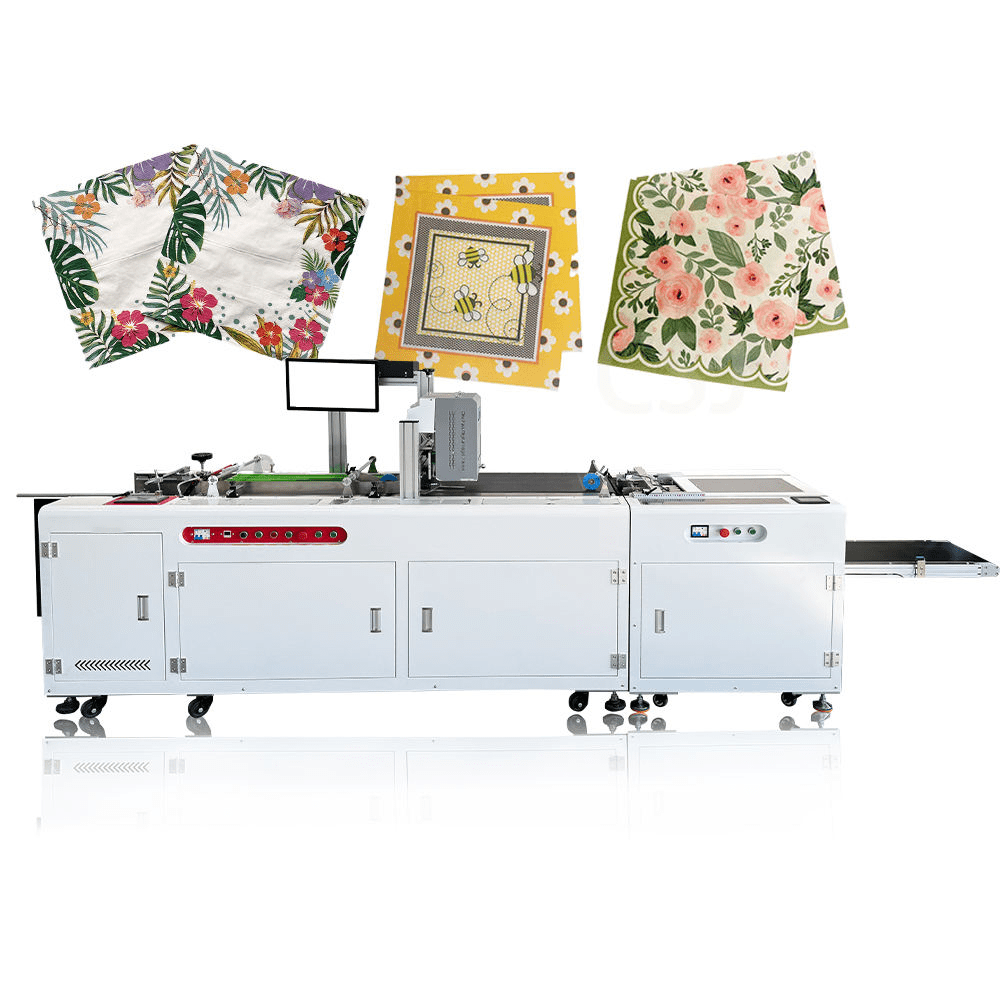
That’s where tissue box digital printers are having an impact. It is designed as a professional printing equipment for tissue products and packaging, and can realize cross-material printing from ultra-thin tissue to hard paper boxes on the same technology platform. The device combines precision feeding and automatic collection systems, and is widely used in products such as boxed facial tissues, plain facial tissues, patterned handkerchiefs, wallet paper, kitchen paper and roll-up toilet paper. In this article, the integrated printing of “tissue+packaging” of tissue box digital printers will be analyzed from three technical dimensions: pressure regulation, color management and digital response.
1.Ultra-thin wallet paper to rigid corrugated cardboard box pressure regulation technology.
The primary technical challenge for tissue box digital printers is the wide range of substrate thickness, from ultra-thin wallet paper (20 g/m2) to corrugated paper boxes with thickness of several millimeters. The required ink pressure for different materials is completely different: too little pressure may cause insufficient ink transfer and blurry patterns; Excessive pressure can damage the corrugated structure or tear the delicate paper.
Modern tissue box digital printers use multi-stage pressure regulation system to solve this contradiction. The equipment is equipped with a servo motor drive precision drive system , combined with a pressure roller rod and an auxiliary roller shaft adjustable , so as to achieve accurate control of the feeding pressure of paper and cardboard . In actual production, the industry generally recommends the “three-step verification method”: set the initial pressure to 80% of the standard value when starting up, increase it to 95% for trial printing, and finally adjust to the optimal state. This progressive adjustment method can reduce more than 60% of indentation failures. There are obvious technical specifications for pressure settings for different types of cardboard. The pressure for single-color printing on A-edge (4.5 mm) cardboard is 3.2 ± 0.3 kg/cm2, and for four-color overlay printing it is 3.8 ± 0.2 kg/cm2. The B-rib (2.5 mm) cardboard is 2.7 ± 0.2 kg/cm2 and 3.3 ± 0.3 kg/cm2 respectively.
Apart from mechanical pressure regulation, dynamic suction adjustment technology based on the medium detection is also introduced in modern equipment. The system can adjust the suction level in real time according to the advancing state of the printing medium on the table, to ensure that ultra-thin paper remains flat during high-speed movement, while avoiding excessive adsorption on thick paper boards. It is the refined pressure control system that gets the work done and the same tissue box digital printer can handle a wide range of materials from 20 g/m2 thin paper to heavy-duty corrugated cardboard with ease, truly achieving integrated printing of “one machine, multiple materials”.
2.How to prevent the color difference between the boxed tissue paper and the outer box pattern
Visual consistency between the pattern of the tissue itself and the packaging box is an important component of brand identity for brand owners. But in the traditional production mode, the paper towels and the packaging boxes are usually printed on different equipment, at different times, and even in different factories, so the color difference problems are almost unavoidable. The tissue box digital printer solves this pain point through three major technological routes.
First, a unified color management system. The equipment is equipped with a CMYK four-color or more color printing system, and together with the professional color management software, it ensures that the output color is based on the same set of color standards whether the printing substrate is paper towels or paper boxes. Research has shown that systematic color management technology can solve more than 90% of printing color difference problems. In specific operations, changing files to CMYK mode and printing them out from the design stage in the PDF format can avoid about 80% of color difference problems.
Secondly, digital colour standards replace physical colour cards. The traditional physical color cards have their own defects such as color fading, batch differences, human interpretation deviation, etc. The digital color workflow of modern tissue box digital printers adopts spectral data as the color standard, and realizes real-time monitoring of printing quality through equipment such as spectrophotometers. After two rounds of color matching, the average color difference of the IT8.7-3 standard sample can be reduced to ΔE 2.50, and the proportion of color blocks with color difference less than ΔE 3.00 is as high as 95.68%. This data suggests that the difference in color between tissue and paper box is hardly visible to the naked eye.
Third, printing in the same batch and in the same machine. This is the biggest advantage of tissue box digital printers: tissues and packaging boxes can be printed on the same device, same batch, and same environment, avoiding color differences caused by equipment, environment and time. Combined with UV ink quick-drying technology, it instantly cures after printing, avoiding the color cast caused by ink penetration differences in traditional processes. This integrated printing mode of “one-time completion” is the most reliable guarantee to ensure that the color of the boxed tissue paper is consistent with the pattern on the outer box.
3.Fast-moving consumer goods brands’ digital response time to seasonal packaging
The FMCG industry is experiencing a deep transformation from “large batch, few batches” to “small batch, multiple versions”. The demand by brand owners for packaging such as seasonal promotions, holiday restrictions and regional customization is increasing in frequency. Traditional printing methods require plate making, sampling and machine debugging and the cycle is often several weeks, which is difficult to meet the rapid response needs of the market.
The situation has been completely changed by the digital features of tissue box digital printers. The device does not need plate making, and design files can be directly input and printed, realizing the “zero plate making” process from design to finished product. Digital printing technology is capable of producing small batches as well as multi-versions, and the whole process from packaging concept to shelf landing can be completed within 7 days. This means brand owners are able to test new designs more flexibly, respond quickly to market trends and produce on demand to avoid inventory backlog.
The market data reflects this trend. According to IDC data, the total revenue of China’s digital industrial printer market in the first half of 2025 was 3.94 billion yuan, an increase of 10.7% year-on-year. The digital packaging and label printing machine market grew steadily. The revenue was 830 million yuan, an increase of 9.3 percent year-on-year. The digital flexible packaging and folding paper box market exhibited a rapid growth trend. The global digital printing market is projected to reach $34.34 billion by 2025 and $48.51 billion by 2030, at a CAGR of 7.16%. The compound annual growth rate (CAGR) of digital inkjet printing in the packaging and labeling fields is expected to be around 15% and 5% respectively and the global market size is expected to reach $18.08 billion and $10.79 billion by 2029 respectively.
In addition to the speed dimension, the tissue box digital printer also supports the variable data printing function. That is, it can print different QR codes, serial numbers or personalized information for each product in the same batch. Data shows that 87% of consumers scan codes for information on product traceability, environmental recycling, and other information. The capability lets brand owners embed interactive marketing elements into seasonal packaging, transforming packaging from a “protective carrier” into a “bridge of dialogue between brand and consumers.”
Summary
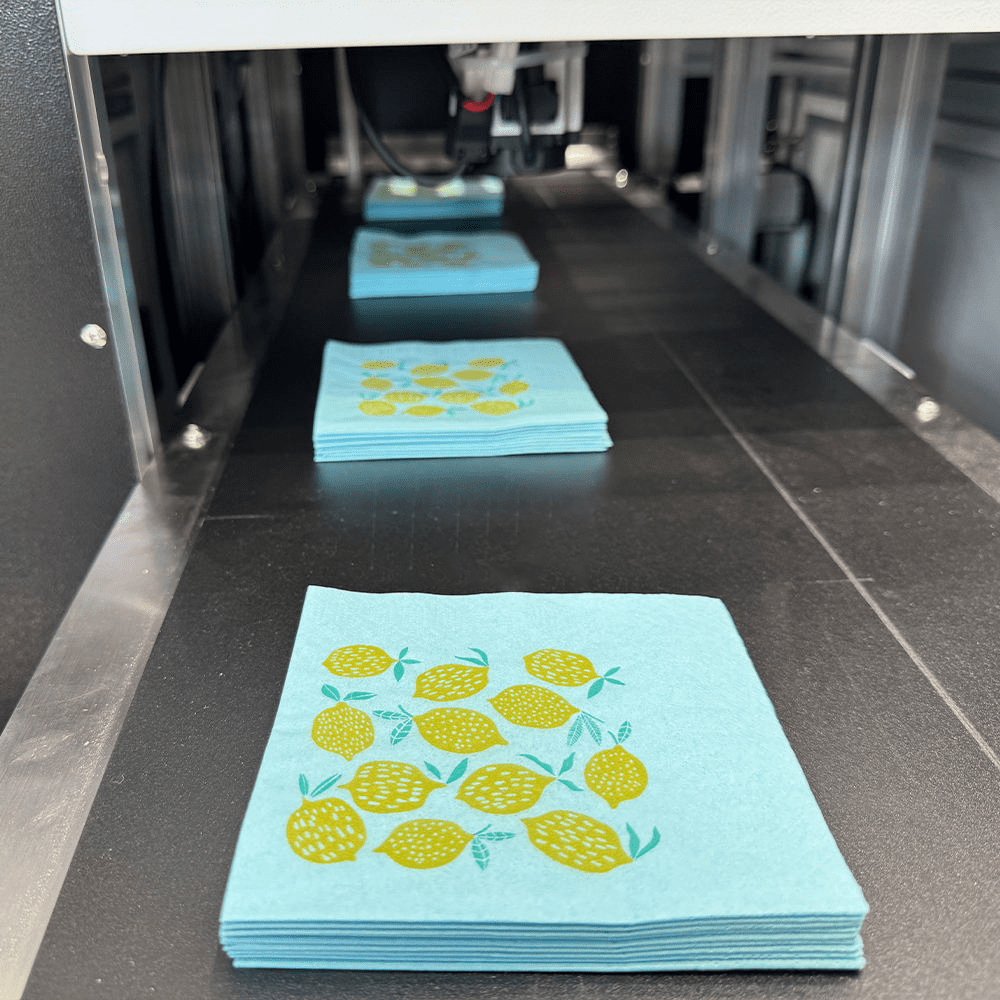
Thanks to a technology system of accurate pressure adjustment, unified color management and digital rapid response, the tissue box digital printer has realized integrated printing from ultra-thin tissues to hard paper boxes. The multi-stage adjustment system with the “three-stage verification method” can reduce indentation failures by more than 60% for pressure control. It supports a wide range of materials from 20 g/m2 thin paper to heavy-duty corrugated cardboard. The digital color management system can control color difference within Δ ΔE 3.00 and realize a color consistency compliance rate of more than 95%. In terms of response speed, the digital process without plate making can compress the packaging launch cycle to 7 days.
During the forecast period, the digital printing market is expected to expand at a CAGR of 7.16% and reach $48.51 billion by 2030. The packaging and label digital inkjet printing market is witnessing a significant growth rate of 15% compound annual growth rate. In this market context, integrated digital printing solutions represented by tissue box digital printers are becoming a key technological path for the transformation and upgrading of tissue and paper packaging industry. Taking advantage of its complete industrial chain and technological accumulation, the equipment manufacturer based in Shenzhen, China, is promoting this mature printing solution to the global market.

No responses yet